Scientists enlist AI to interpret meaning of barks

Researchers from the University of Michigan set out to discover whether scientists could get round that lack of data by piggy-backing on research carried out on humans.
Read more
Researchers from the University of Michigan set out to discover whether scientists could get round that lack of data by piggy-backing on research carried out on humans.
Read more
Part 4: The dangling conversation In the previous article, we saw bacterial populations defend themselves collectively. Cyanobacteria formed protective flocs, while dying E.
Read more
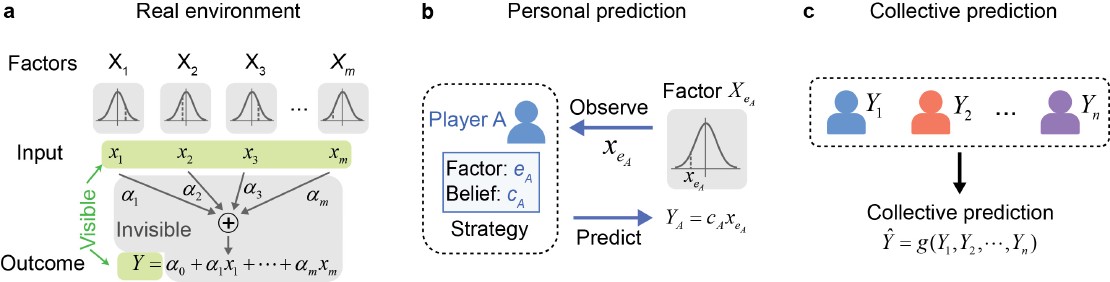
A game theory model examines how collective intelligence can arise when each individual observes only one part of a complex environment.
Read more
In the previous article, we saw that bacteria may encounter several overlapping signals. Different messages can indicate neighbours, competitors, changing conditions or competing courses of action.
Read more
To Which Quorum Should a Bacterium Listen? In the first article on microbial communication, we saw how bacteria release chemical signals that accumulate as a population grows.
Read more
This is a part one of a four part series of emergent microbial communication. “Quorum sensing”, “quorum quenching”. Cool words, what are we talking about here?
Read more
A great article to capture the principles we use at adaptive-emergent. Lessons forgotten in the cloud. https://www.tredence.com/blog/agentic-swarms-lessons-from-nature-for-machine-intelligence
Read more
The knapsack problem is the classic optimisation problem: You have a backpack that can carry only a certain weight. You have a set of items, each with a weight and a value.
Read more
Over this 7-part series, we’ve explored how natural systems — ants, bees, birds, and brains — solve problems through emergence, not instruction.
Read more
In particular areas of human endeavour, precision in language matters, such as contract law. Sometimes the language is numbers, like in accounting or science.
Read more