Robot snails, bio-inspired robots that team up!

Researchers at the University of Hong Kong demonstrated small snail-inspired modular robots that can physically attach to one another using suction-based coupling.
Read more
Researchers at the University of Hong Kong demonstrated small snail-inspired modular robots that can physically attach to one another using suction-based coupling.
Read more
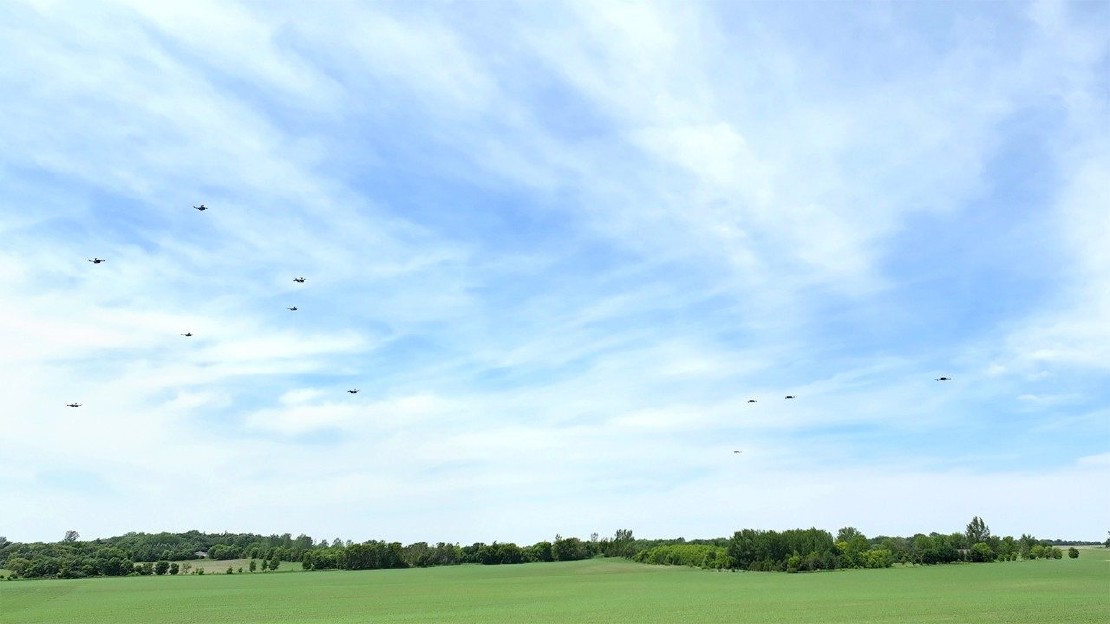
A recent patent landscape analysis highlights how biologically inspired swarm coordination methods are being displaced in some military and industrial drone systems by multi-agent reinforcement learning, while still influencing routing, resilience, and distributed control architectures.
Read more
Interspecies communication networks about threats can shape animal communities, as many species produce alarm calls while eavesdropping on those of others, resulting in information flow crossing ecological niches and taxonomic boundaries.
Read more
Worcester Polytechnic Institute researchers developed a bat-inspired sensing and navigation system that allows palm-sized drones to move through smoke, fog, and visually degraded environments using ultrasound and lightweight onboard AI.
Read more
A drone coordination stack using stigmergy-inspired signaling enables distributed inspection coverage across large industrial assets. Each drone adapts locally to coverage gaps and environmental conditions without centralized orchestration.
Read more
Robot swarms are beginning to shift from pre-programmed coordination toward AI-enabled collective autonomy, allowing groups of machines to adapt dynamically without centralized control.
Read more
Recent patent analysis shows autonomous underwater systems rapidly evolving toward coordinated swarms and cross-domain teams combining aerial, surface, and underwater vehicles.
Read more
A Springer Nature Research Communities article describes a plant-inspired adaptive façade using hygromorphic, biobased 4D-printed materials that change shape in response to weather.
Read more
Researchers found that adding small random movements (“wiggling”) to robots in dense swarms prevents congestion and improves throughput. The approach mirrors biological systems where stochastic motion helps ants, cells, and animals avoid deadlock in crowded environments.
Read more
A newly reported biomimetic robotic fish uses undulatory propulsion inspired by real fish to reduce disturbance in aquaculture environments while collecting sensor data.
Read more