Here are 13 peer-reviewed publications on the infrastructure to make embodied intelligence possible. In order you will find:
1. Human–robot object handover This review surveys how robots pass objects to people and receive them back, framing handover as a foundational capability for human–robot collaboration. It organizes the field by robot role, end-effector type, grasp strategy, and motion planning, and highlights remaining challenges before handover becomes reliable in everyday settings.
2. Aquatic Unmanned Aerial Vehicles (AquaUAVs) This paper looks to animals that move through both air and water, especially gannets, cormorants, flying fish, and flying squid, to explain what current AquaUAVs still lack. Its core message is that effective amphibious robots will need better propulsion, lower-drag structures, and body layouts inspired by evolutionary trade-offs in real animals.
3. Variable stiffness in flexible surgical robots The review explains the central trade-off in minimally invasive surgery: robots need to be flexible enough to snake through the body, but stiff enough to transmit force and stay accurate. It classifies the main ways stiffness can be varied, links them to anatomical constraints of natural body pathways, and points to the most promising methods for future surgical systems.
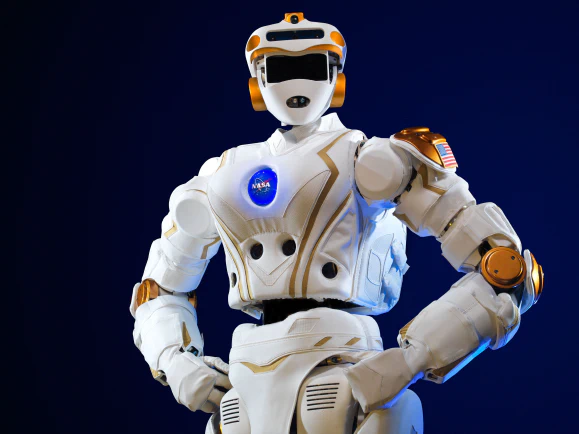
4. Visual perception in humanoid robots This survey argues that better vision is one of the keys to making humanoid robots more autonomous and useful in domains like healthcare and manufacturing. It focuses on recent advances in state estimation and interaction with the environment, while noting that current vision systems still fall short of the robustness needed for full deployment.
5. Sampling-based motion planning This review examines motion planners such as PRM- and RRT-style methods that are popular because they cope well with complex spaces and offer useful formal guarantees. It compares ten widely used planners across application scenarios and concludes that, despite strong progress, there are still unresolved trade-offs around efficiency, path quality, runtime, and real-world practicality.
6. Human-like dexterous manipulation with five-fingered hands This paper reviews what it would take for anthropomorphic robot hands to manipulate objects with something closer to human dexterity. It defines the relevant tasks, discusses uncertainty in unstructured environments as a core problem, and maps the field around grasping, in-hand manipulation, and control of multi-fingered hands.
7. Bioinspired aquatic jumping robots This review studies robots that jump out of or across water, taking inspiration from animals that use impulsive, momentum-based, or mixed water–air locomotion. It summarizes body designs, actuation methods, and jumping mechanisms, with the broader point that jumping may become a useful way for aquatic robots to gain cross-domain mobility and adaptability.
8. Autonomous and multi-robot navigation This survey organizes the multi-robot navigation field around three pillars: perception, planning, and collaboration. Across more than 170 references, it reviews how autonomous robots sense the world, choose paths, and coordinate with one another, while also identifying open challenges and likely future directions.
9. Bathing assistive devices and robots for the elderly This paper addresses a very practical aging-population problem: how to assist older adults with bathing safely and effectively. It reviews devices and robots across different bathing methods, postures, and stages of care, with the aim of clarifying the current technical landscape and where future elderly-care bathing systems should develop.
10. Military exoskeletons This review looks at exoskeletons for soldiers, focusing on the technologies behind them rather than only the applications. It covers mechanical design, transmissions, sensors, and actuators, then uses that survey to discuss the present state of soldier-oriented exoskeletons and where research is likely to go next.
11. Machine learning for myoelectric prosthetic hand control This survey reviews machine-learning approaches used to improve recognition of muscle-signal-based hand gestures for prosthetic control in the real world. Its emphasis is on accuracy outside the lab, where noise, user variability, and practical operating conditions make prosthetic hand control much harder than benchmark results often suggest.
12. Humanoid dexterous hands and gesture semantics This review goes beyond the mechanics of dexterous hands and into the meaning of gestures in human–robot interaction. It integrates hand structure, gesture semantics, and user-experience evaluation, then proposes a closed-loop “perception–cognition–generation–assessment” framework to support more natural and effective gestural communication.
13. Bio-syncretic robots actuated by living materials This paper reviews robots that combine living biological materials with artificial structures, aiming to merge biological efficiency and adaptability with robotic programmability and control. It classifies these systems by structural design, then surveys fabrication methods, control strategies, possible applications, and future development paths.