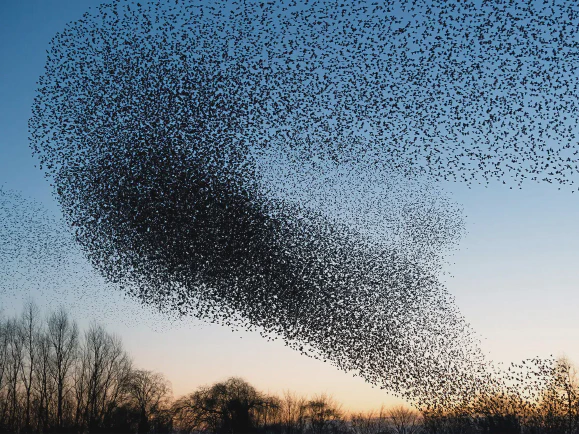
This paper looks at how robot swarms can move more smoothly by not only reacting to what nearby robots are doing now, but also by briefly predicting where they are about to move next. The idea is inspired by birds and drones, where small body movements often signal a turn before it actually happens.
In simulations, this made the group line up faster, stay together better, and cope better with delays, noisy signals, and imperfect communication. In plain terms, the swarm becomes less twitchy and more coordinated because it is partly “looking ahead” instead of only reacting at the last moment.