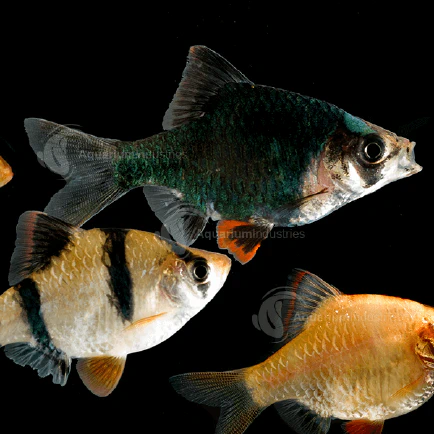
Rosy barbs and tiger barbs have markedly different individual swimming patterns, yet form cohesive mixed-species schools by matching speed through local interactions. The tiger barbs’ slower swimming mode disappears, leaving the combined school dominated by a shared fast-moving state.
The result shows how heterogeneous agents can converge on a common operating mode without becoming identical. Local speed matching creates coherent collective motion while still allowing the species to sort spatially within the group.
https://www.biorxiv.org/content/10.64898/2026.07.10.737720v1