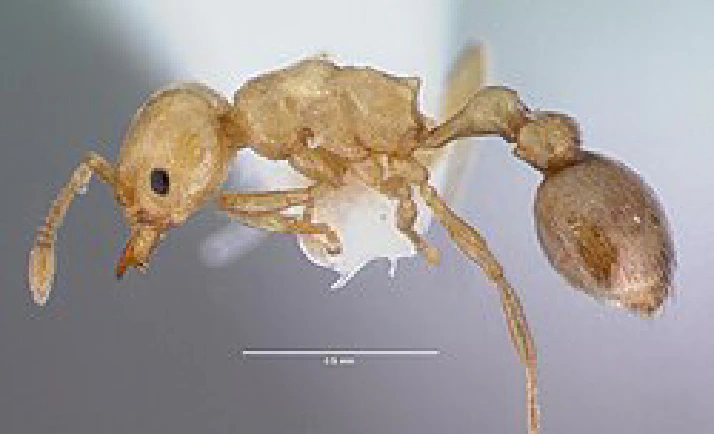
Cardiocondyla ants can dynamically switch between nutrients supplied by an ancient bacterial symbiont and their own alternative metabolic pathway.
This is a strong natural example of graceful degradation and functional redundancy. A distributed system can depend heavily on a specialised partner under difficult conditions while retaining an alternate route that becomes active when that partner disappears. The result is resilience without requiring every component to duplicate every function continuously.
The bacterium Westeberhardia supplies precursors needed for tyrosine and folate production and substantially improves colony performance when protein is scarce. Yet colonies that lose the symbiont can increase activity in a separate pathway that derives tyrosine precursors from dietary amino acids. The partnership therefore behaves less like a permanently hard-wired dependency than a conditional biological resource that ants exploit according to environmental circumstances.