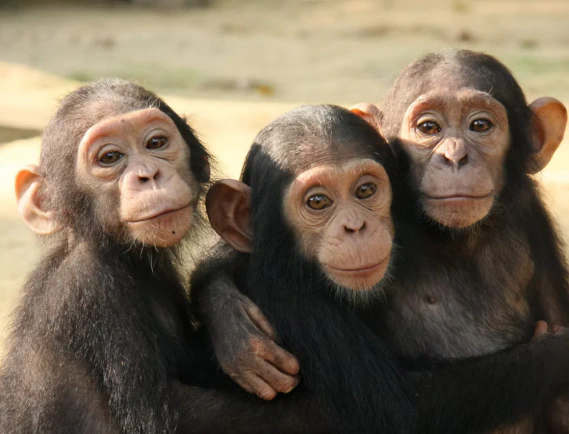
Young chimpanzees develop increasingly distinctive population-specific vocal patterns as they mature.
Researchers comparing grunts, whimpers and laughter from two geographically separated communities found that some differences were detectable in infancy while others became stronger during juvenile development. The pattern argues against vocal behaviour being determined solely by genetics and suggests that social interaction and local ecological conditions progressively shape how animals communicate within their group.