Bacterial “zorbing” is a newly discovered form of collective social movement where spherical, biofilm-like microcolonies of Flavobacterium johnsoniae “walk” and migrate together across surfaces. Flavobacterium johnsoniae can switch between two radically different forms of collective organisation through a single environmental sensing pathway.
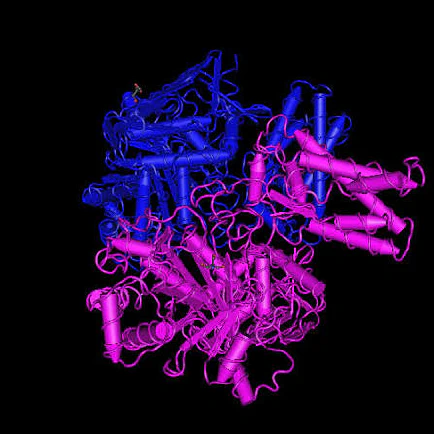
Researchers identified RgzAB, an unusual sensor kinase-response regulator system that connects iron availability to a choice between planar swarming and migrating spherical microcolonies called zorbs. The same circuit also controls organisation inside mixed populations: activated cells can encapsulate wild-type neighbours into segregated co-zorbs, where those neighbours form networks that undergo an abundance-dependent, percolation-like transition.