Collective animals can communicate indirectly through the fluid disturbances their own movements leave behind.
This extends stigmergy beyond persistent structures such as ant pheromone trails or termite construction. The communication substrate can instead be transient, continuously rewritten and produced automatically as a consequence of agent behaviour. That suggests distributed architectures in which ordinary activity modifies a shared dynamic field that subsequently guides other agents, eliminating the need for explicit peer-to-peer messages.
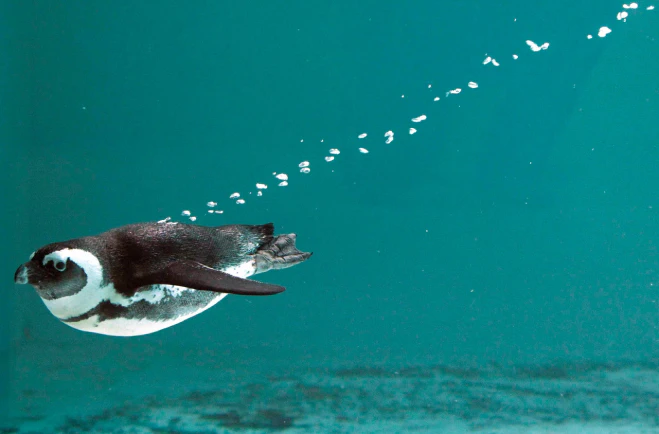
A new comparative treatment describes this mechanism as fluid stigmergy: swimming or flying organisms alter the surrounding water or air, creating wakes, vortices and other flow structures that neighbouring animals can detect or exploit. Those environmental traces can transmit information, alter movement and recycle energy across groups ranging from microorganisms to fish and birds, making the shared physical medium an active component of collective organisation.
https://academic.oup.com/icb/article-abstract/doi/10.1093/icb/icag154/8762554