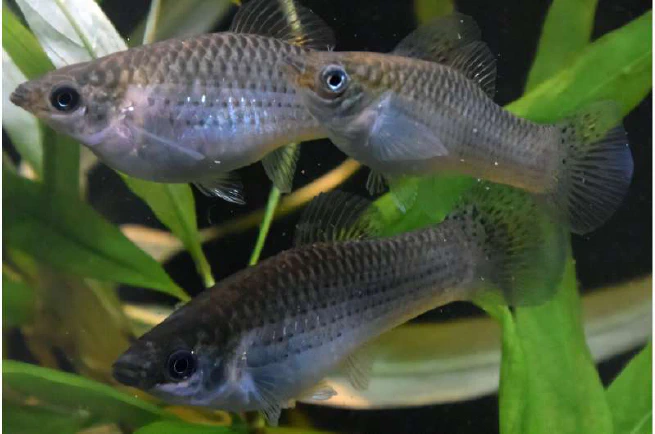
Genetically identical fish can develop strikingly different collective behaviours despite growing up under standardised conditions.
Researchers followed ten groups of four Amazon mollies over 55 days, recording how their movements and social relationships developed. Initially, the young fish behaved largely independently. Around three weeks of age, they began forming increasingly cohesive shoals, with pronounced coordination emerging around day 30. Yet different groups developed distinct behavioural trajectories. The researchers suggest that feedback between individuals increasingly shapes group behaviour, producing collective characteristics that cannot be predicted simply by averaging individual tendencies.
https://phys.org/news/2026-09-groups-genetically-identical-fish-behavioral.html