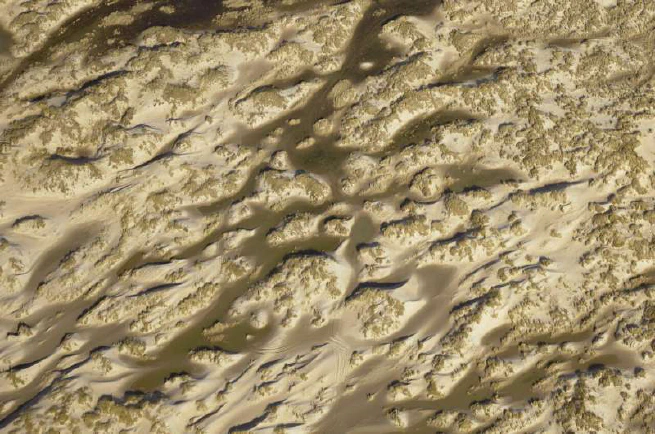
Coastal dune systems develop large-scale spatial patterns through feedback between vegetation density and the movement of sand.
Researchers studying marram grass and developing dunes on the Dutch island of Texel found that densely vegetated patches capture disproportionately more windblown sand, allowing larger dunes to grow while smaller neighbours shrink or disappear. The resulting landscape resembles phase separation rather than a regular arrangement of equally spaced patches. Crucially, vegetation density determines whether disturbances recover or become self-reinforcing, creating local tipping points even when the wider dune system remains resilient.