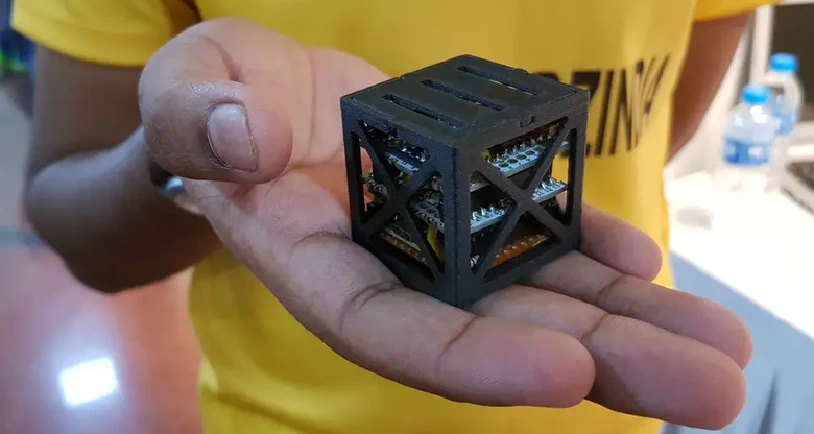
A proposed spacecraft-swarm architecture enables miniature satellites to coordinate their orbital positions without conventional propulsion or continuous ground control.
Presented at the International Astronautical Congress on 8 October 2026, the research describes PocketQube satellites independently adjusting their orientation to change atmospheric drag. Each spacecraft executes lightweight onboard decisions that influence its orbital energy, relative spacing and position within the constellation. The framework incorporates nonlinear orbital dynamics and atmospheric perturbations. High-fidelity simulations indicate that the distributed approach can maintain coordinated formations, reduce long-term drift and improve coverage uniformity for sensing and communications missions.