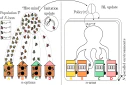
Researchers have developed a method for robotic swarms to construct collective shapes through local interactions rather than a predefined deployment-wide attachment list.
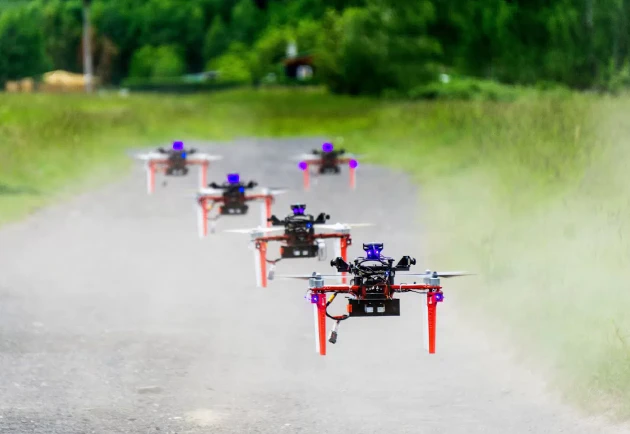
Their framework uses neural cellular automata, allowing robots already occupying a formation to update and exchange local states that reveal where additional robots should attach. Simulations demonstrate multiple lattice shapes and scalability to several hundred robots. Crazyflie quadrotor experiments validate the integrated formation process, although robot-relative observations were reconstructed using external tracking. The work illustrates how progressively assembled structures can emerge from distributed local information.