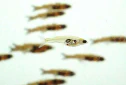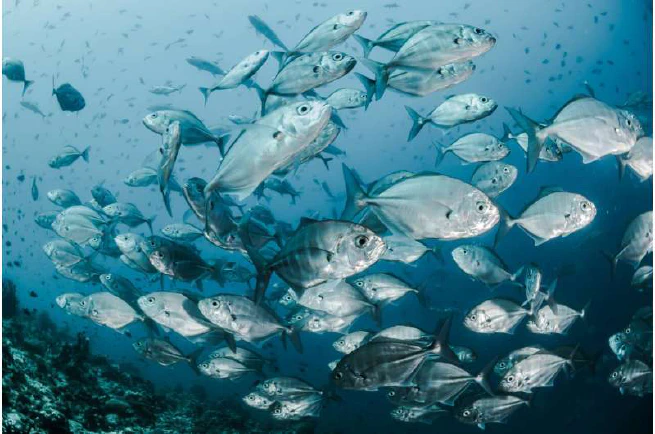
Fish may coordinate their swimming partly through physical interactions with water rather than relying exclusively on sensory communication.
Researchers combined computational modelling, experiments with self-propelled foils and observations of goldfish swimming in pairs. Their Vortex Balance Model predicts swimming configurations using hydrodynamic interactions and relative tailbeat timing. Model predictions matched observed configurations increasingly well as researchers reduced visual and lateral-line sensory information. The preprint provides indirect evidence that passive fluid interactions contribute to schooling organisation, while active sensory responses can modify or override those effects.
https://www.biorxiv.org/content/10.64898/2026.11.12.766162v1