Part 2: Everybody's Talking at Me

To Which Quorum Should a Bacterium Listen? In the first article on microbial communication, we saw how bacteria release chemical signals that accumulate as a population grows.
Read more
To Which Quorum Should a Bacterium Listen? In the first article on microbial communication, we saw how bacteria release chemical signals that accumulate as a population grows.
Read more
Researchers found that aphids transfer several of their own microRNAs, together with the regulatory protein Argonaute 1, into Buchnera bacteria living inside specialised host cells.
Read more
Greater Japanese horseshoe bats gradually converge on a shared echolocation frequency after unfamiliar individuals join a colony. Instead of separating their signals into individual channels, lower-frequency bats shift upward until colony members preserve a common clutter-free band in which echoes from fluttering prey remain detectable.
Read more
Wood ants maintaining their nests can move sticks cooperatively even when there is no shared destination or leader directing the task.
Read more
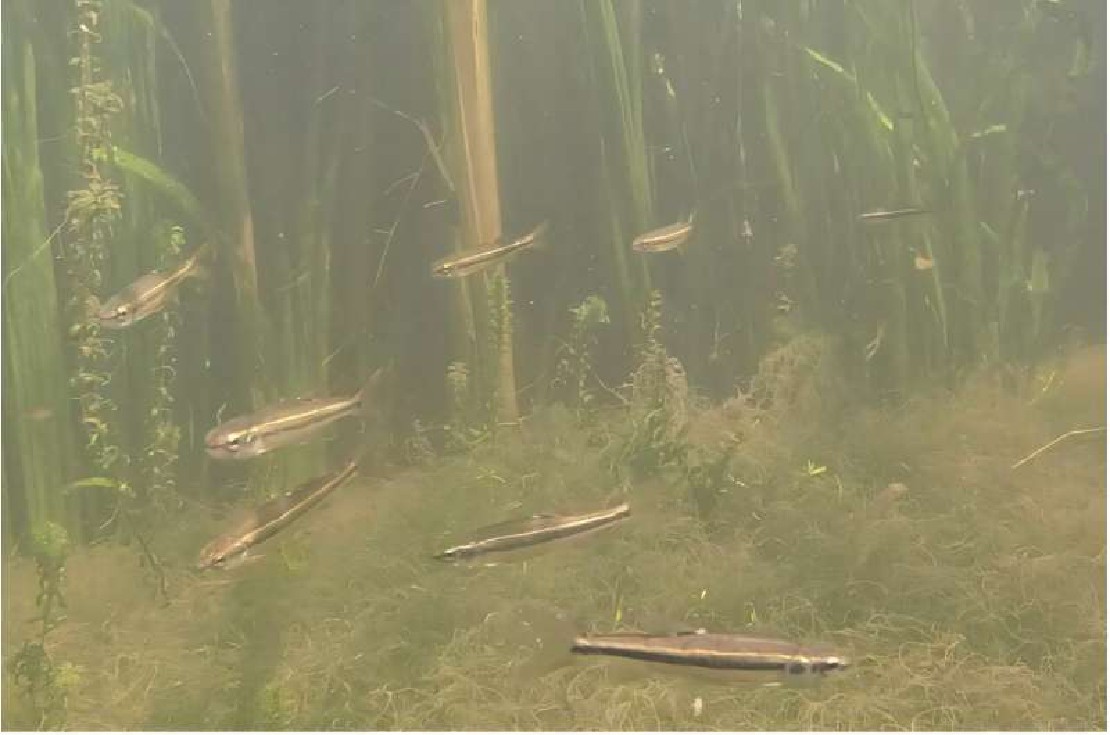
Rosy barbs and tiger barbs have markedly different individual swimming patterns, yet form cohesive mixed-species schools by matching speed through local interactions.
Read more
A honeybee-inspired study compares centrally directed organisations with decentralized groups whose members allocate work through local communication and differing behavioural thresholds.
Read more
A new preprint examines how pairs of homing pigeons establish leader and follower roles when navigating with unfamiliar partners. The work matters because it reveals how distributed groups can rapidly settle coordination roles without a central authority or an established social history.
Read more
Research published in Behavioral Ecology and Sociobiology used drone footage and trajectory modelling to infer how Tibetan antelopes coordinate while moving.
Read more
A mathematical study of leaderless collectives found that efficient groups need only a small number of persistent risk-takers to explore during poor conditions, while the majority wait for favourable signals.
Read more
Research into the ectomycorrhizal fungus Laccaria bicolor found that cadmium exposure can trigger stress signals in parts of the fungal network that never directly encounter the metal.
Read more