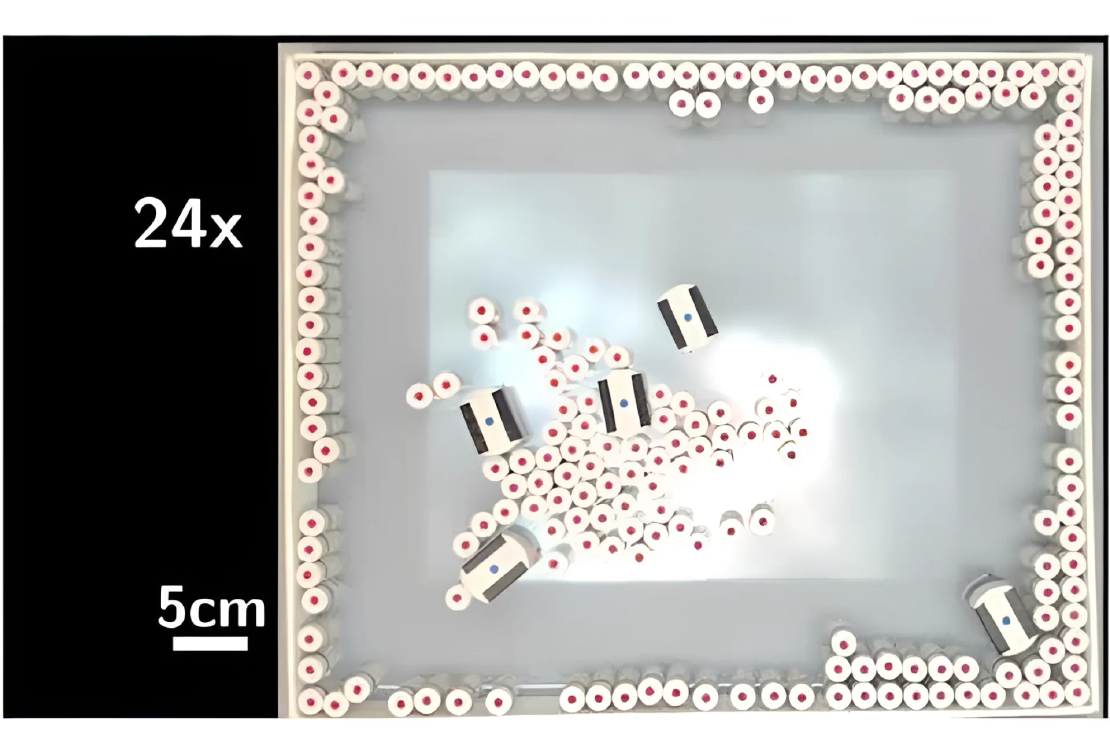
Automatic Design of Stigmergy-Based Behaviours for Robot Swarms

Leaving breadcrumbs (well, pheronome trails) to lead the way. https://pmc.ncbi.nlm.nih.gov/articles/PMC10956014/
Read more
Leaving breadcrumbs (well, pheronome trails) to lead the way. https://pmc.ncbi.nlm.nih.gov/articles/PMC10956014/
Read more
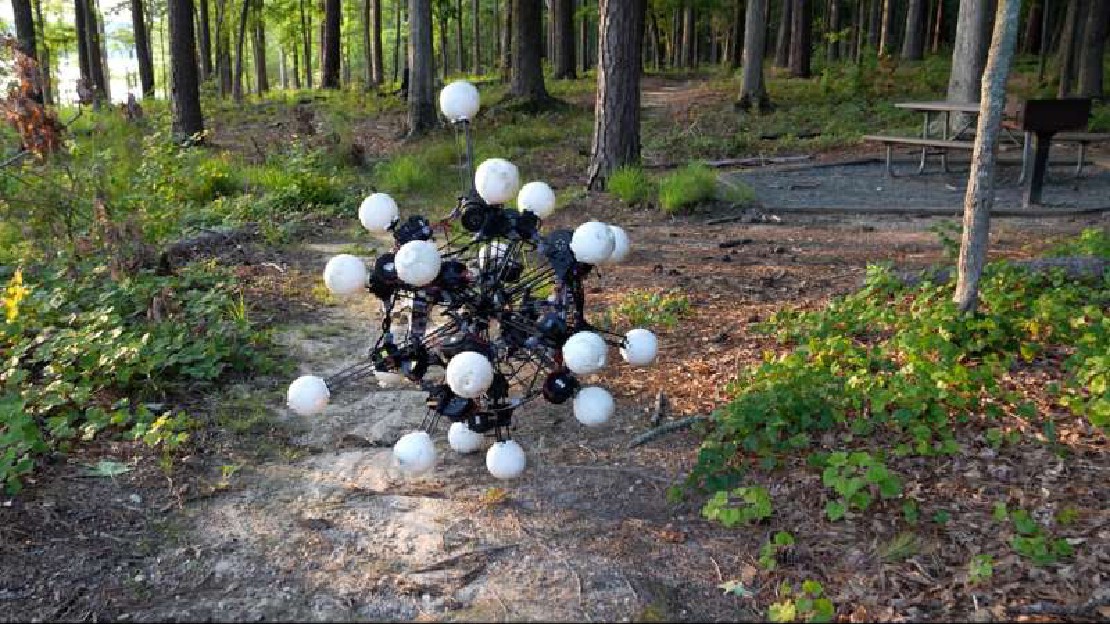
This article reports on a robot system inspired by how ants communicate using pheromone trails. Instead of real chemicals, the robots follow artificial “pheromone” signals so they can coordinate with one another and make group decisions in a similar way to ants.
Read more
Fractals! Ant colonies, materials like gases and liquids, and robot swarms may all follow a similar underlying pattern: lots of individuals behaving somewhat randomly, but still producing large-scale collective behaviour.
Read more
The algorithm models ant nest-selection behaviour to solve the “best-of-n” consensus problem using only local signalling. It demonstrates how response thresholds, recruitment, and biasing mechanisms enable robust distributed agreement without central control.
Read more
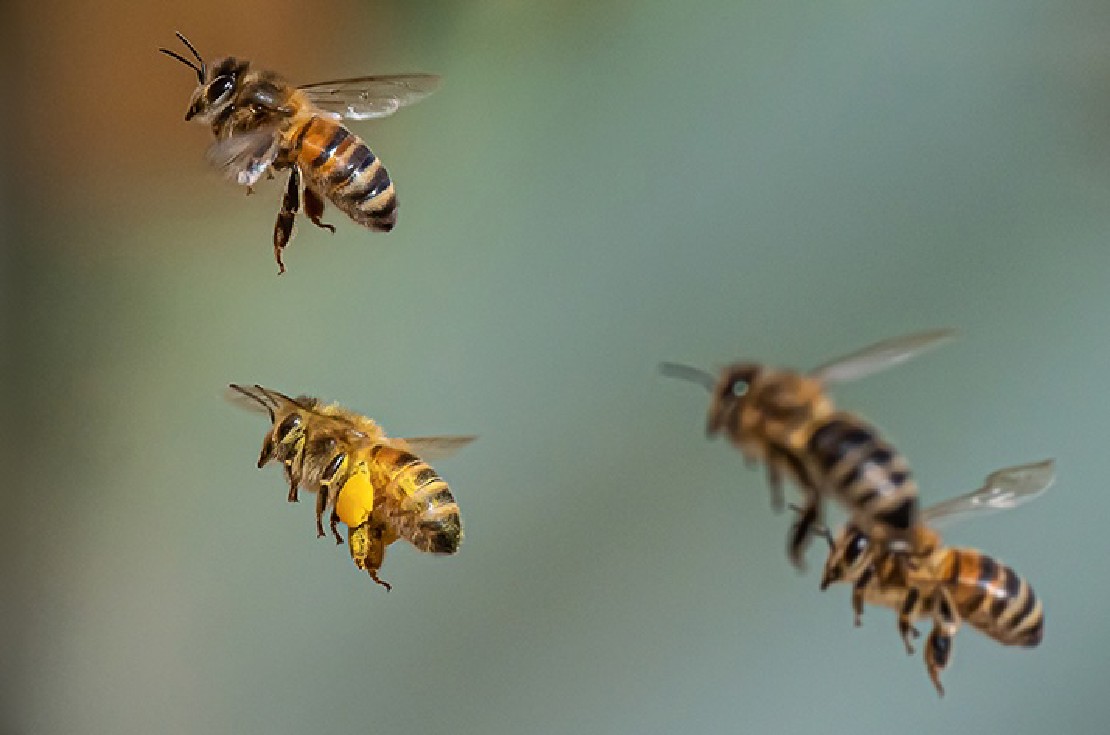
This paper explores a way for drones to communicate with each other visually, instead of relying on radio, by copying signalling ideas from animals like bees, deer, and peacocks.
Read more
The accelerator targets startups explicitly using biological signalling, coordination, and adaptation principles. These programs often surface applied implementations of swarm intelligence and collective sensing before they appear in formal literature.
Read more
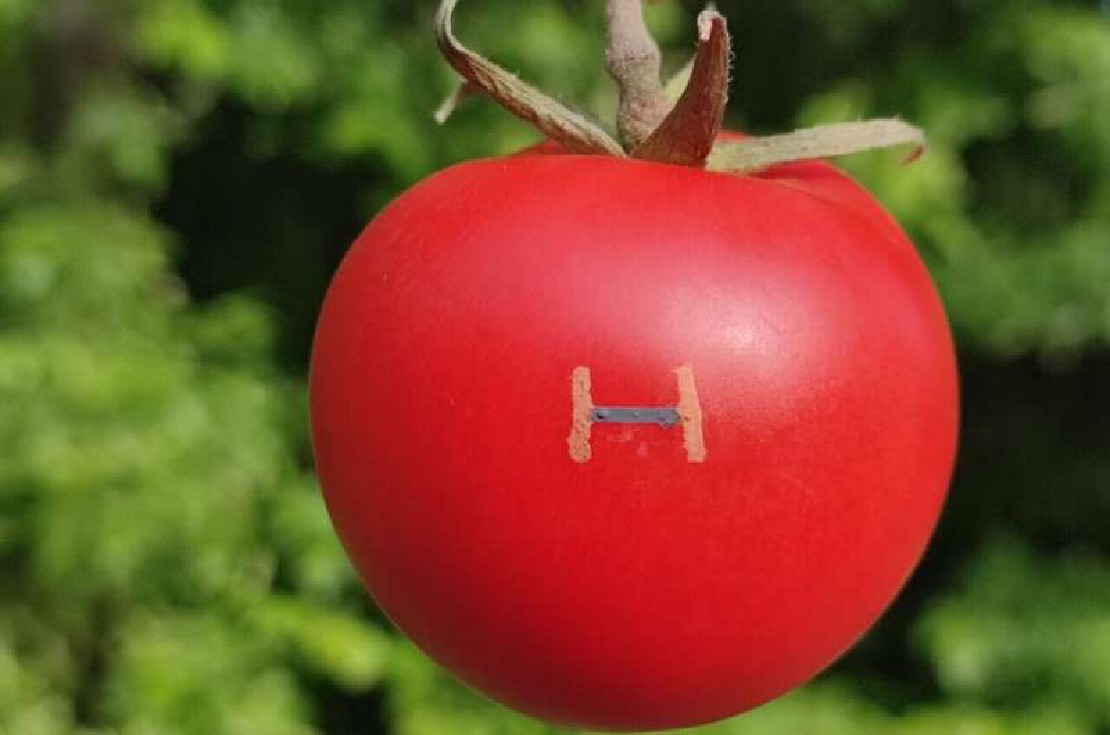
Anyone remember smart dust? A cloud of sensors were thrown from a plane into a .. real cloud to study storms, wind patterns, etc.
Read more
This article says animals in groups, like bees, fish, or birds, can solve problems together through many small local interactions, and engineers are using those same ideas to build robot swarms that can act without a central controller.
Read more
8-10 June 2026 in sunny Germany. ANTS solicits contributions dealing with any aspect of swarm intelligence. Typical, but not exclusive, topics of interest are:
Read more
Here are 13 peer-reviewed publications on the infrastructure to make embodied intelligence possible. In order you will find: 1. Human–robot object handover This review surveys how robots pass objects to people and receive them back, framing handover as a foundational capability for human–robot collaboration.
Read more
From Sheffield research to “natural intelligence” Opteran Technologies (registered in the UK as Opteran Technologies Limited) is a spin-out from University of Sheffield that formally incorporated in March 2020.
Read more
adappt’s heritage is in its name. Read all parts to this series: In part one, we reviewed what was adappt.io, from 2015 to 2024.
Read more